
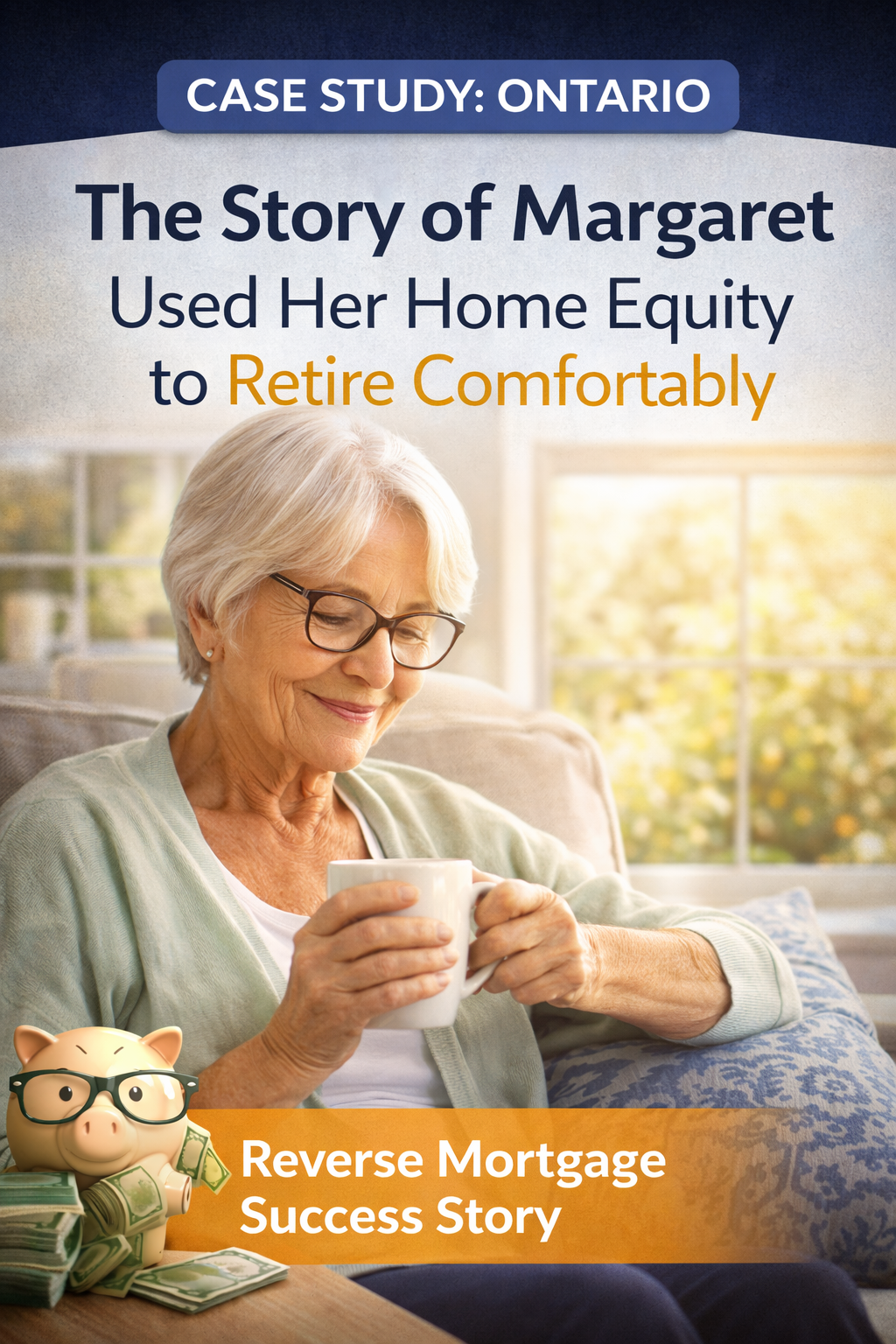
Reverse Mortgage Case Study: The Story of Margaret - Used Her Home Equity to Retire Comfortably
Margaret is a 72-year-old homeowner in Ontario who has lived in her home for over 25 years. Her property is fully paid off, but like many retirees, her income is fixed while living costs continue to rise.
She wanted to remain in her home but needed additional cash flow to comfortably manage expenses, home maintenance, and future healthcare needs.
The Challenge
Margaret was asset-rich but income-constrained.
Her primary concerns included:
- Avoiding monthly mortgage payments
- Not selling or downsizing her home
- Accessing funds in a tax-efficient way
- Maintaining long-term financial stability
Traditional refinancing and home equity lines of credit required ongoing payments, which didn’t fit her retirement goals.
The Solution: A Reverse Mortgage
After reviewing her options, Margaret chose a reverse mortgage.
This solution allowed her to:
- Access a portion of her home equity as tax-free funds
- Eliminate monthly mortgage payments
- Retain full ownership of her home
- Use the funds with complete flexibility
She selected a lump-sum option to supplement her retirement income, complete home upgrades, and build a financial safety net.
The Outcome
With the reverse mortgage in place, Margaret gained peace of mind and improved cash flow. She continues to live in her home comfortably, without the stress of monthly mortgage payments.
The loan will only be repaid when the home is sold or the estate is settled. Importantly, reverse mortgages in Canada are non-recourse, meaning the loan balance will never exceed the home’s value.
Key Takeaway
A reverse mortgage isn’t the right solution for everyone, but for the right homeowner, it can be a powerful retirement planning tool.
Understanding the long-term implications and reviewing all options with a qualified mortgage professional is essential before making a decision.
Call to Action (Optional Section)
If you’re an Ontario homeowner aged 55+ and want to explore whether a reverse mortgage fits your situation, getting clear, pressure-free advice is the best first step.




Contact
Rick Bettencourt, Mortgage Broker Level 2,
FSRA License #M11002425
licensed with Chartered Finance, Brokerage #12791
#302 – 7300 Warden Ave, Markham, Ontario.
Phone: (647) 952-1661
Helping Ontario homeowners access practical mortgage solutions with clarity and confidence.
© 2025 Pure Mortgage Advisory Services. All rights reserved.